
I hope later this year we get a 2ghz'ish, 4"+ screen, front facing camera, vanilla flavored, sliding keyboard having phone. That would make me empty my pockets immediately
Exactly. That's what I want too.

I hope later this year we get a 2ghz'ish, 4"+ screen, front facing camera, vanilla flavored, sliding keyboard having phone. That would make me empty my pockets immediately

I hope later this year we get a 2ghz'ish, 4"+ screen, front facing camera, vanilla flavored, sliding keyboard having phone. That would make me empty my pockets immediately
Well yeah...2ghz phones by the end of the year/beginning of next year are a no brainer. But it's the other options I want to come with it
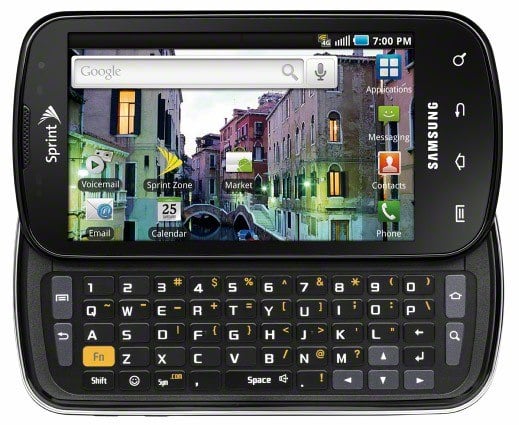

will you buy it from america, casey? you're so lucky!! i prefer the design of the original galaxy s, but i also like the four buttons at the bottom of the pro, similar to other htc and motorola devices
Yeah, we got everything here.
If anyone is running Rom Manager, I upped a link to the premium version so everything is available. Download com.koushikdutta.rommanager.license.apk from Sendspace.com - send big files the easy way
Why do people prefer CM ROMs? Is it for the themes and all? Because it seems to me most of the ROMs are merely for aesthetics only. The only difference being between a 2.1 and a 2.2 ROM. If it's speed you're after, why not just flash a kernel that has what you want?
Thanks for the link.
CM ROMs are the best because there's a fuckton of features added that are only in CM ROMs. I can't be arsed to find a feature list right now, but there's well over 25 additional features, things like FLAC support, USB and Bluetooth tethering, etc, etc. They also have the best support system of any custom ROM, the biggest team working on them, and get updates the most. CM had the first and best ROMS for Eclair, FroYo and they will be first with Gingerbread too.
I see. I realize they are very big, but there are other ROMs as well. I figured those are done by individuals rather than a team like Cyanogen. So like indie projects.
The ROM doesn't determine the speed or performance of the phone, does it? Couldn't I just use 6.0 RC2 with a 1.25 kernel and still get the same results across the board with other ROMs?

So, what's the consensus on the Samsung Galaxy S? I noticed both AT&T and T-Mobile have it. It seems bulky with the huge screen, but surprisingly light. It feels weird in that sense because you'd expect it to be heavier for how big it is. I played with it at AT&T and noticed that they pretty much completely copied Apple's app style with the multiple screens and square-shaped apps.
Android surges past iPhone in smartphone sales - RIM and Windows Mobile continue to slide
Sales of Android-based smartphones are surging, tearing chunks of market share out of Apple, RIM, and Windows Mobile's hides.
According to a report released Monday by the analysts at The Nielsen Company, although RIM and Apple still hold their number one and two positions as the top two suppliers of smartphones in the US, Android phones are catching up — fast.
According to Nielsen's figures, among new subscribers in the past six months, those picking up Android phones inched past iPhone buyers in the second quarter of this year, garnering a 27 per cent market share to the iPhone's 23 per cent.

In addition, a separate report by the market watchers at Canalys pegs Android-phone growth at a whopping 886 per cent from the second quarter of 2009 to the same quarter this year.
Both info-nuggets, however, carry hefty caveats. The iPhone 4 shipped on June 24, right before the quarter ended. Its 1.7 million first-weekend sales are presumably included among the Nielsen numbers, but sales of the Jobsian handheld — antennagate or no antennagate — have been strong during the ensuing weeks. A true iPhone v. Android analysis must wait until the iPhone 4 has a full quarter in the sun.
The Canalys number, also, is to be taken with an exceptionally large helping of caution, seeing as how an 886 per cent growth from a tiny number — Android sales in the second quarter of 2009 — is not a realistic metric. The Android-based Motorola Droid, for example, didn't see the light of day until November of that year.
Even with those cautions in mind, however, the growth of Android is not to be taken lightly if you happen to occupy a corner office in Cupertino, California, or Waterloo, Ontario. Nielsen's numbers, for example, put RIM's six-month market share at 45 per cent in the second quarter of 2009, but by the same period this year it has slid to 33 per cent.

Even more worrisome to those enterprising Canadians is RIM's comparatively poor performance when Nielsen asked current owners of Android, iPhone, and BlackBerry phones which type of phone they'd consider for their next purchase. Only 42 per cent of BlackBerry owners said they'd stick with their current brand, while 71 per cent of Android owners and a full 89 per cent of iPhone owners planned to remain loyal to their respective OSes.
And speaking of corner offices, there can't be many smiles in Redmond, Washington, either. Windows Mobile held a 27 per cent US-smartphone market share in the second quarter of 2009, according to Nielsen, but that number had shrunk to 15 per cent by the second quarter of this year.
With the rise of Android and the continuing popularity of the iPhone, BlackBerry OS 6.0 and Windows Phone 7 will have their work cut out for them. ®

