
Anyone heard of a Doogee?
Just got one as a work phone - android based
I’d never heard of them before. But damn, that some battery life. I wonder why it not in the US, although they’re damn cheap on Amazon.

Anyone heard of a Doogee?
Just got one as a work phone - android based

One of my co-workers has an insane Doogee phone with like an 8000mAH battery or something nuts like that. It's pretty thick, but it literally goes 4 full days without needing a charge.
I often wonder why there is little variety in smartphone design. Is it because different phones don't sell, and everyone suddenly blended into liking the exact same things? I would like a change and take a slightly thicker phone if it meant a larger battery. All phones these days are a glass sandwich too, with some all metal. It looks like they ditched plastic, despite it having its own advantages in many models. I would like to go back to the times when phones specialized, and you could have a bad-ass camera phone, a walkman, a different form factor etc. I'd be the first in line for a new major Pureview Nokia-like Android phone, for instance, with a large camera sensor and a larger battery.
Doogee is a knock-off of Xiaomi at the moment though. A Chinese-Spanish knock-off of another Chinese company that doesn't sell their phones globally yet is a whole new level. I've heard they're not bad though for what they are.

https://www.tomshardware.com/news/intel-processors-lazyfp-speculative-execution,37302.html
Only 2 out of 8 spectre variants went public and were ghetto-patched so far. So far each of the patches has slowed down the Intel CPUs. Skylake at this point was degraded to below pre-patched Sandy Bridge performance per clock. Yet most patches were not even applied yet, and most bugs were not yet announced due to Intel's pleads for time to patch them before that happens.
I'm surprised it's only popped up now, considering those vulnerabilities have been there since 2011, and I wonder when will Intel finally release a more secure architecture that actually isn't vulnerable to those things, as Coffee Lake is still just Sandy Bridge with tweaks and toothpaste as a coolant, instead of liquid metal.
YesAnyone heard of a Doogee?
Just got one as a work phone - android based
Could this be the reason why all the computers at work seem to have slowed down considerably in the last few months?
I was wondering if I'd notice a difference if macOS was ever patched. It might have been, according to Apple, but I didn't notice anything slowing down on my system. Whether it be simple browsing or something more intense, like gaming.
Apple said GeekBench showed know difference after the patch. Unless I'm not reading it correctly. Which I'm probably not: https://support.apple.com/en-us/HT208394
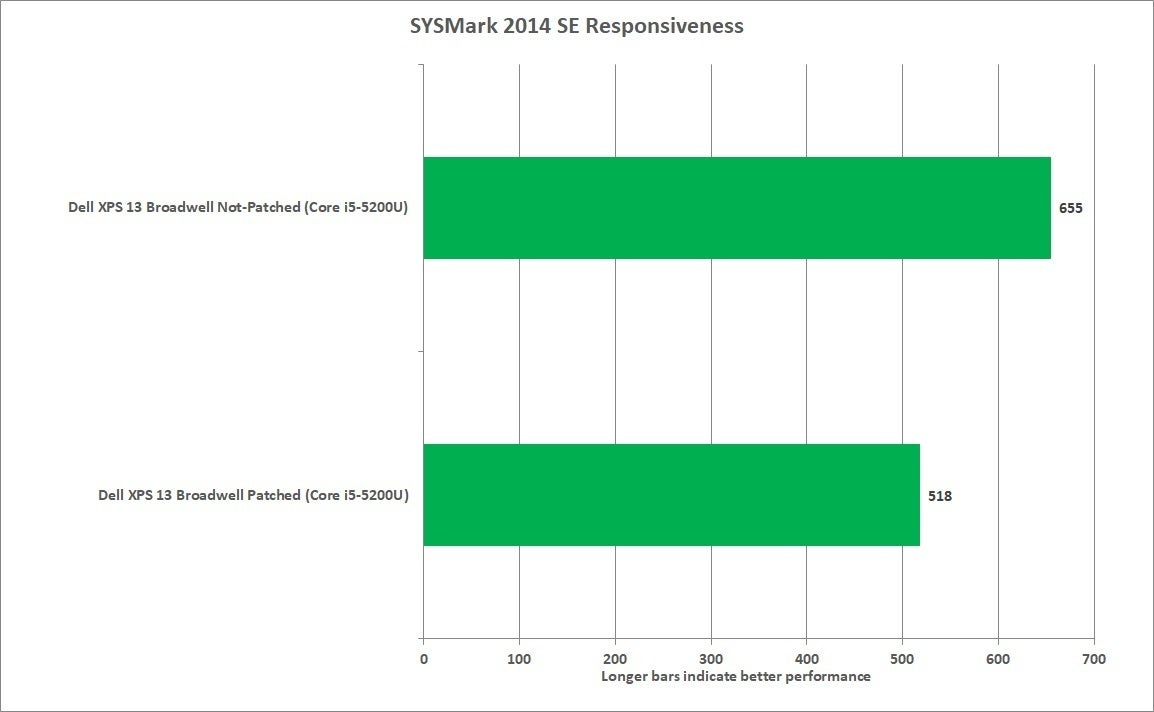
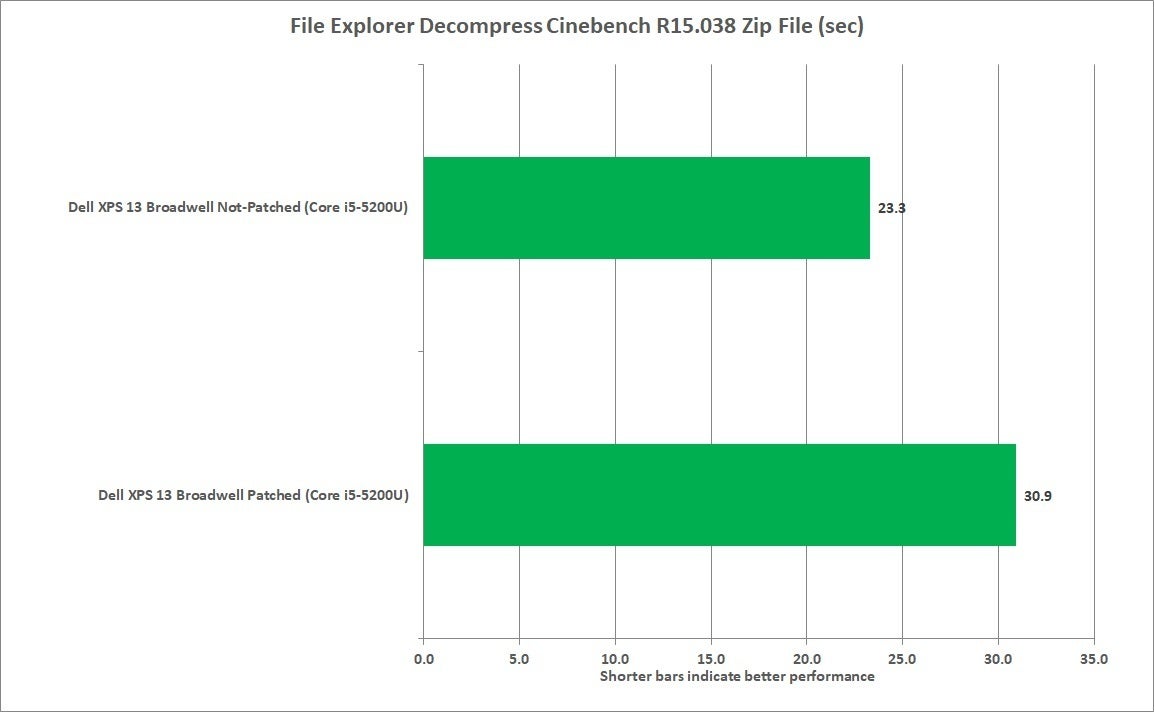
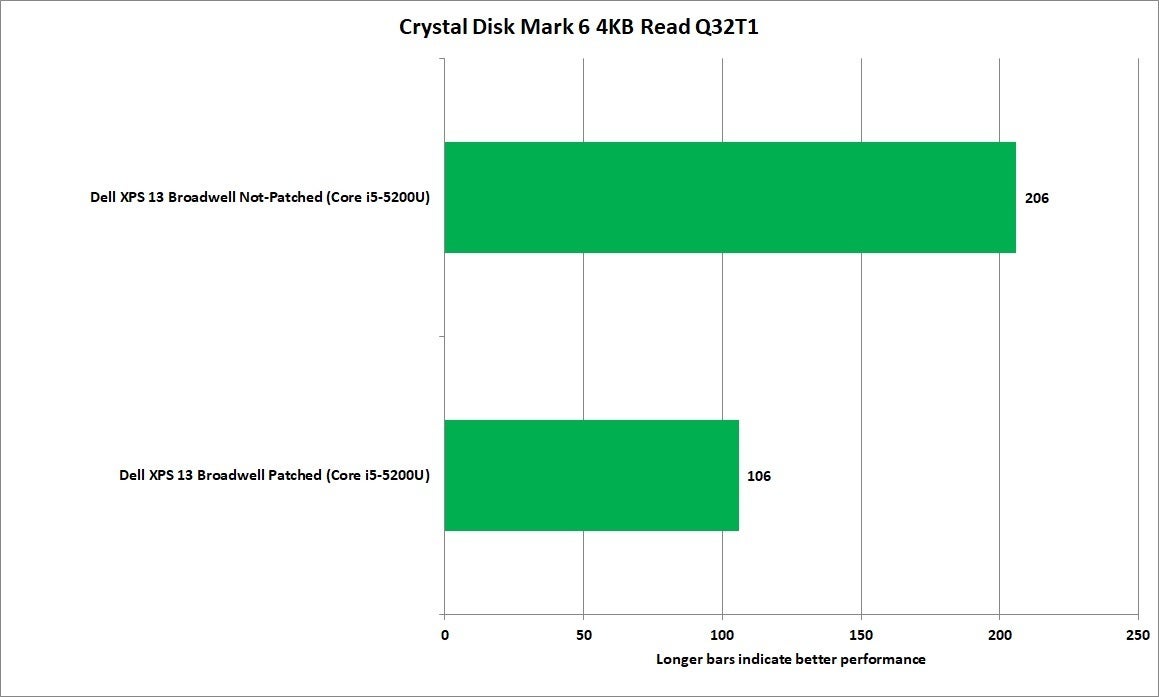
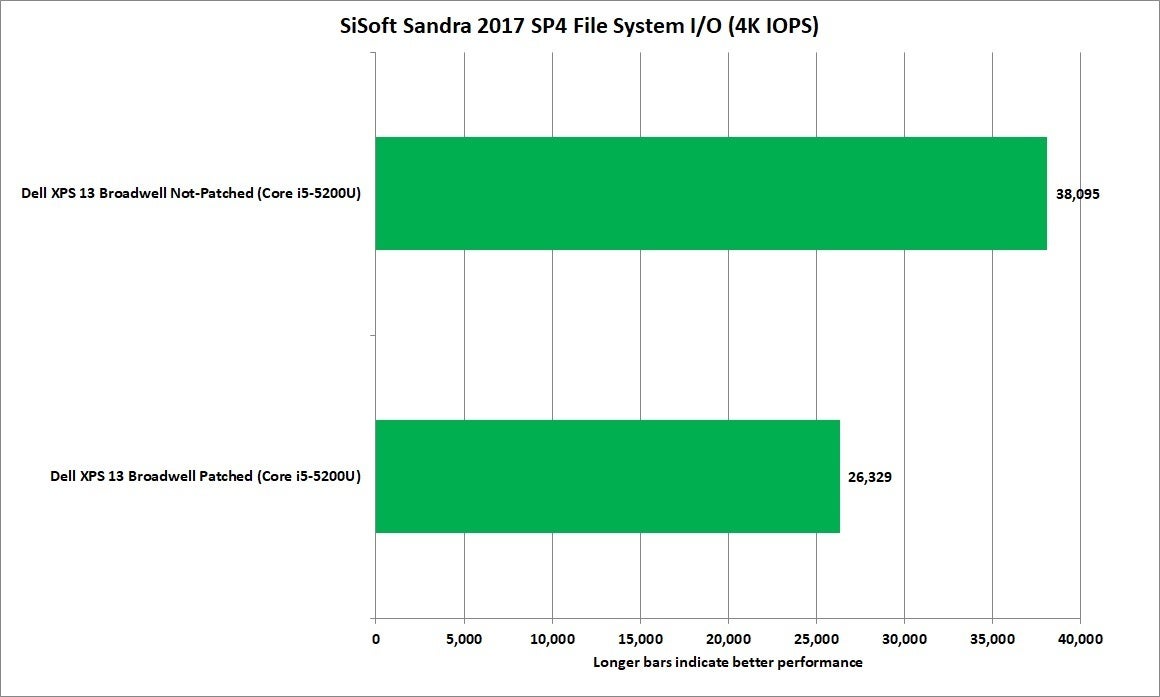
Yeah, you wouldn't notice that in browsing or gaming. None of those rely on speculative execution or are limited by the CPU much. If you worked with lots of data or your processor started crunching numbers, that's where your processor would simply be slower than it used to be. Even loading things, unzipping etc. - everything simply takes a bit longer again.
I wish someone did this with the current gen MacBooks with Kaby Lake. Would OS have a role in this despite being a patch for hardware? I don’t think any PCs use the same CPUs exactly as Apple does but even if they did, would macOS vs Windows be a factor in the performance?
They use the same CPUs. Intel doesn't make CPUs exclusively for Apple, Apple just purchases what's available, what every other OEM purchases. On top of that, each processor in a given generation (ie. Kaby Lake) has exactly the same core (they only manufacture one), so technically it's the exact same processor - they just receive different voltage and have different clocks/cache amounts depending on configuration, but the cores themselves are always the same, whether there are 2 or 4 or 6 of them. On top of that, the Kaby Lake core and the Coffee Lake core use exactly the same cores as Skylake, just manufactured differently, which allowed them to be clocked higher, and they got minor software tweaks that still don't alter the way the CPU processes tasks. They all work in the same way, and are as vulnerable to any potential issues, and the issues are solved in the same way for all of them.
Kaby Lake took a smaller hit than Broadwell, but the OS doesn't matter. Apple just ported the same fixes that were applied on Windows. The fixes are a microcode received directly from Intel that gets slapped on a CPU and nobody else has access to (not Microsoft, not Apple). The OS is just the vehicle for delivering the patch to the CPU, and the CPU behavior gets altered, and that behavior is not dependent on the OS.
I see. What I was trying to get at was if I had a 7700 on my MBP and a Dell had a 7700 on theirs, would their GeekBench score be the same? And if not, would the delta between pre and post-patch be the same between the two machines.
So while I get that the versions of a generation of Intel processors that Apple uses are nothing special, just labeled differently and with minor changes, I wanted to see if there was a drop in performance between OSs, keeping everything else the same. But I see you answered that.
I just want to see those benchmarks for my machine, or really just any new Mac that has had the patch applied. Yeah, I don't do any intensive tasks outside of gaming, but even then, gaming should have taken a performance hit, and I feel like I may be getting about 10 fewer FPS in a game since earlier this year. Depends on when that patch was pushed out.
The Geekbench score doesn't really show much regression regardless of the OS, as most areas hit by the patches aren't tested by Geekbench, and if some are, the performance penalties don't impact the total score in a meaningful way. For instance, if you run 200 different performance benchmarks and one of them reports a drop by 99%,, the total score will still be within 1% of its prior score. However, the part of the processor that does so poorly now is the bottleneck to many system activities. The remaining parts of the processor aren't specialized enough to efficiently cover for the aspect that took a major performance hit, and they can do it with, let's say, 30% of the efficiency. Because they still perform as well as they did, the score didn't change, but they need to spend 3 times as much time covering for the part that did take a performance hit in many real life scenarios (as also measured by other, more specialized benchmarks, or even general system tests).
Things that suffered the most are OS independent, so apart from minor differences, both, Windows and Mac, will see a fairly similar hit to performance. The processor, for instance, regardless of the OS, gets instructed to obtain data from the hard drive/SSD. The processor, therefore, does its work before the OS gets the data back, and the work that the CPU does between receiving the request and providing the data back to the OS was one of the things that took a major hit. It's the way the CPU handles its tasks, and it happens completely outside of the OSs jurisdiction - the OS is not aware what the CPU is doing internally, it can do nothing to help or interfere, and that's the layer that's slowed down by the patches (Microcode, which was applied to the processor, not the OS). The OS only knows that it took the processor longer to provide it the requested data back. Furthermore, the processors have something called "Speculative execution", which basically tries to guess what it will be asked to do next based on what it's just accomplished, and prepare some extra work beforehand to gain some performance advantage. Intel's was very aggressive and could be fooled (a hacker could feed the processor some given stimulus to make the processor guess a certain, malicious way). Since the "guessing mechanism" is embedded in the hardware, Intel's only "fix" was to disable that part entirely, making the processor perform more grunt work in real-time instead. Fixing it for real requires a hardware redesign - a future gen chip could have a more secure speculative execution engine, like AMD does, that wouldn't have to be disabled, because it couldn't be fooled so easily, bringing back the performance advantage of speculative execution. You can't get that performance back through software, let alone the OS (which can only be optimized by sending less requests to the CPU, but doesn't have much control over how the CPU performs its tasks).
In terms of games, they barely took any hit, as the CPU activity in games is very, very simple, and is limited mostly to feeding frames to the GPU to process. That has almost nothing to do with Meltdown or Spectre. Furthermore, on laptops with low power GPUs, the FPSs in games are limited purely by the GPU, which didn't take any performance hit. Basically, even if the CPU became slower, a CPU could still provide frames to the GPU faster than the relatively weaker GPU would take to render them. Basically, a 7700 is capable of throwing 140 frames per second to a GPU. If a patch slowed down the CPU and it can only pump out 120 frames per second now, the GPU still can't render more than 30-40, so you still wouldn't notice any difference. This and the fact that games don't do much in terms of speculative execution or real time heavy data manipulation (so the CPU hit in this regard was tiny) means that you likely wouldn't notice any difference, except the loading screens could last longer.
I gotcha. I'm thinking maybe my drop in frames might be due to using an external monitor, albeit at the same resolution and scaling as before. That would make sense too if the GPU was a tad bit more stressed than usual by being connected to a monitor vs using my MBP's screen.
And there's no way to un-do the patch on the user's end, right? Say if someone wants to risk it all but gain the performance back? I wouldn't be against it. I still have the December 2016 security patch on my S7 because Sprint and/or Samsung are incompetent tits and can't recognize my phone is stuck on a beta. Their beta.

One of my co-workers has an insane Doogee phone with like an 8000mAH battery or something nuts like that. It's pretty thick, but it literally goes 4 full days without needing a charge.

